So, when you think of eating disorders, what comes to mind? Someone who tends to just eat too much? Someone who dislikes food and does not eat much at all? Someone who tends to be very self-conscious and looks in the mirror a lot?

So, when you think of eating disorders, what comes to mind? Someone who tends to just eat too much? Someone who dislikes food and does not eat much at all? Someone who tends to be very self-conscious and looks in the mirror a lot?

The next week will be a very special week for Dear Hope; this week, we will see a featured piece every day relating to a topic: eating disorders. Allow me to explain where the idea originated.

Last fall, I came across a great organization titled Active Minds. Over a decade ago, a wonderful woman named Alison Malmon began this organization after losing her brother, Brian, to suicide. The conversation on mental health needs to become commonplace, thought Alison. Of course, this is not a quote, but rather one of the driving ideologies behind Active Minds. Its purpose, in abbreviated form, is to embed chapters into college campuses, bring together passionate students with the common goal of raising mental health awareness, decrease stigma, and create more accepting, welcoming environments among a demographic where mental illness is rampant.
I started a chapter at my school, and I have loved everything about it over the last year and a half. I have loved being shown the sides of people that would never have emerged had the conversation not been started. I have loved opening myself up emotionally to something that I have never felt fully comfortable with because such an omnipresent stigma exists.
Dear Hope loves to focus on these goals in many different ways, one of which is through personal narrative. Coping: This is Who We Are is such an incredible series because it gives us living, breathing proof that mental illness is so real that it feels tangible. It shows us the true stories behind our loved ones, our acquaintances, and strangers across the globe. There is so much that the surface does not show. And so, the many driving forces behind awareness and reducing stigma, such as Active Minds or Dear Hope, simply want to make what is under the surface come up and gasp an oxygenated breath of relief, free of any shame.
This week, February 21st-27th, is Active Minds’ National Eating Disorder Awareness Week. The events occurring on campuses across the United States will range from speakers, to narratives, to panels, to screenings, and far into the realms of creative mental health education. As I organized for our week, I thought, why not include Dear Hope?
So, we gathered narratives, poems, and other creative pieces to showcase those who have identified with struggling with some sort of eating disorder. Some are anonymous, some are identified. Some are narratives, while others are creative pieces. Regardless of the format or identity, we wanted to dedicate an entire week to showcase stories of struggle, self-doubt, and healing within this specific area of mental health. Every area of struggle deserves its highlight, and we at Dear Hope want to spread the message that no matter what you experience, you should never feel marginalized or alone.
This is our test run; we only have room to grow. Four pieces: four stories of mountains and valleys with all of the details beautifully scribed to evoke emotions of empathy and compassion is just a start. 20 million women and 10 million men in the United States alone identify with struggling with an eating disorder, with many more unreported. Let these narratives be a seed to relate to, to expand upon, and to spread the message that you truly are beautiful and good enough just the way you are. Even though eating disorders go far beyond a conscious dislike for one’s self-image or diet, encouragement such as this is an abbreviation of “I validate your struggle, but want to encourage you that the person you are is one of a kind, and thus, amazing.”
So, if these pieces speak to you in any way, spread them. We want to hear narratives of more women who have struggled with the concepts of skinny, societal expectations, and self-image. We want to hear stories of those who have suffered from bulimia and other binging/purging experiences. We want to hear from men who have struggled with a category of mental illness that is constantly pounded with the societal hammer of masculine expectations to have muscles and be tough. We want to hear your stories of using food as a coping mechanism and overeating. The list goes on.
To wrap things up, my point is that while these four profound, insightful, and wonderful stories have infinite potential for impact and empathy, they are only a snippet of the experience behind food, body image, and mental health. A journey of a thousand miles begins with a few impactful steps that leave permanent prints in the ground, in this case at least.
Tomorrow you will see some background information on eating disorders. What are they? How do you know when restricting, overeating, or looking in the mirror becomes unhealthy? This information is vital in understanding the symptoms that serve as a baseline, in some way or another, to these stories. The following four days, we will share these stories with you. As always, feel free to always ask questions, provide support, give feedback, or build upon anything that is discussed this week.

Remember, you are not alone.
And you are loved.
-DK
An Introduction To Eating Disorder Week – What are Eating Disorders? – He Called Me the “T” Word” – An Empty Home & An Empty Stomach: My Lifelong Struggle With Eating Disorders – The Fine Print – Doubt: Sarah’s Poem – A Journal on the Imperfections of Perfection – Nervosa
Source(s): https://www.nationaleatingdisorders.org/get-facts-eating-disorders
Note: If you want to read more about Active Minds or Alison, please follow this link: http://www.activeminds.org/index.php . I’ve naturally abbreviated all of the wonderful work that they do, so if you’re interested, I encourage you all to check it out 🙂
Want to submit to this site and share your story, art, or article related to mental health or mental illness? Email wemustbebroken@gmail.com


“I am a 29 year old average Australian Psychology student who has ADD, depression, anxiety and Binge Eating Disorder. I am no artist, but I can dream. I have found an outlet in creating – be it by computer, words, or images.
This image is a visualization of the intense emotional pain that is currently trying to burst out of me all at once. I call it life pain, as it is the accumulated pain and hurt from the span of my life.”
This piece was submitted by the talented Donna Shell. You can find her on WordPress, Deviantart, and Instagram. Find more art submitted to Dear Hope here.
Always remember you are not alone.
You are loved.
PF
Want to submit to this site and share your story, art, or article related to mental health or mental illness? Email wemustbebroken@gmail.com
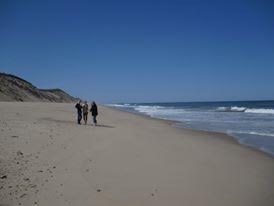
This piece, titled “Losing Your Mother to Mental Illness”, comes from the incredibly brave Ariana Hegarty, who reflects upon her mother’s bipolar disorder.
I’ll never forget our shopping sprees and laughing until our stomachs hurt in the dressing room when something I thought was adorable, looked ridiculous. But as the years go on, the good memories fade away while the bad ones continue to stand out. And I’m not sure if it was the bipolar disorder or her mere disinterest in raising children, but on my 14th birthday my mother moved out and I would never see her again.
There was no casket, no funeral was held, and you won’t find an obituary anywhere but by all other definitions, my mother is dead. She is simply a shell of a woman who was once married to her high school sweetheart with two daughters who loved her endlessly. But now, I don’t know exactly what she does on a day to day basis, maybe she’s still drinking, and perhaps she stills spends most of her days in bed. Its five years later and I can’t help but worry about these things, because at one point I thought I could help her.

What if mental illnesses were shown on the outside?
Would we still be afraid to ask for help?
Since I was 13 years old I have fought depression, anxiety and bouts of insomnia. Since then I have tried to explain what that pain, discomfort, emptiness, and apathetic nature feels like to people. Often the words would come up short, and even the poems, songs, and stories I wrote didn’t seem to fully paint a picture into someones head to make them understand what I was going through. As I increasingly became aware of the lack of education and the stigma that surrounds mental illness and mental health, I thought about trying a different approach.
And that’s when the Consumed: Mental Illness Through Photography project was born.

In our latest submission in the Coping series, we have the story of Brian:
Depression came to me before I was aware of it. The first time I felt out of place was in kindergarten when I waited for my mother to pick me up from school. I lived right across the street from my school, and my grandmother would meet up with me to walk across the street. Things started to change when I was told that my Mother would pick me up. At the time, this was important to me because my relationship with my Mother was distant. My Mother didn’t really do much for me, and treated me like I did not exist. When I found out that she was going to pick me up from school, it meant the world to me, even though I was not aware that this would be the beginning of feeling like an outsider. My mother suffers from cerebral palsy and has a walking impediment. As you would guess, this was a challenge due to the public perception of disability in 1992.
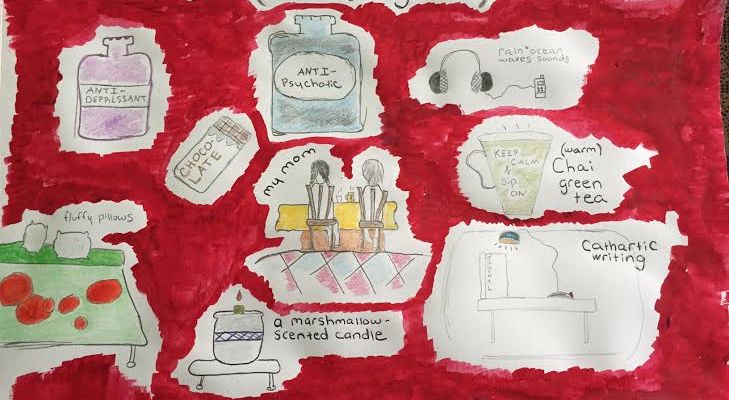
Below is Ethar’s poem “Almost”, and her artwork of what helps her make it through the day.
“I will go down to the lake
And dip my toes in the blue-green water,
Tadpoles tickling my feet.
It would be a cliché scene
If it weren’t for my bottle of morning Prozac
Sitting beside me,
On the grass.

Growing up I was taught at a very young age the only way to become successful was to earn a 4.0 GPA. A high GPA meant acceptance into the best universities across the country. So I pushed myself to earn nothing but the best grades so I wouldn’t disappoint my parents. Year after year I continued to beat myself up if I received anything less than an A. But then something happened that would change my life forever.
My mom had a psychotic break.
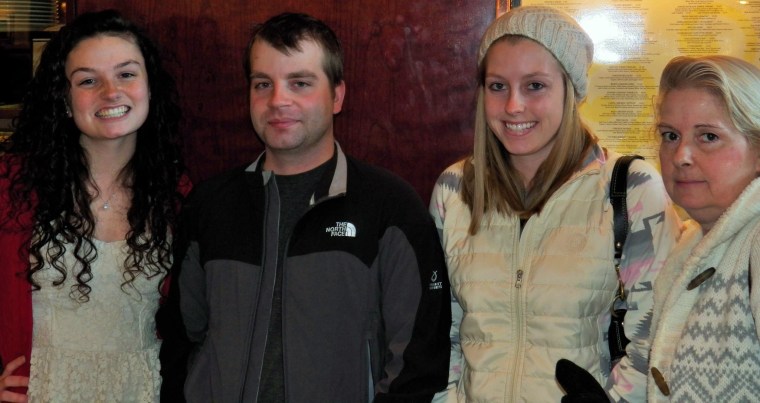
Jacquelyn (Pictured far left), her siblings, and mother (Far right).
She was diagnosed with severe depression and bipolar disorder. Witnessing the acts of mania my mom exhibited scared me – she did things that I thought only a “crazy” person would do. My mom was hospitalized in a psychiatric ward for months on and off for a whole year. I was 13 at the time and remembered absolutely dreading going to visit her. Everything was locked and I thought that the patients were treated like prisoners. My mom’s doctors even made me sit in a conference with my mom and her psychiatrist asking if I wanted my mom to get better. That to me was scarring – of course I wanted her to get better but not in a place like a psychiatric ward.
It was all too much for me to handle.

This post is a little late, but HAPPY NEW YEAR EVERYONE!
My personal life has become hectic once again, and found myself beginning to neglect the website through the holiday season. But I wanted to take a look back and reflect before going forward into 2016.
In February of 2015 Dear Hope started out as a personal blog for a class I was enrolled in for college credit. By May, I had remodeled that blog into this website; one that I hoped would turn into a community of people sharing experiences about their relationships, struggles, and triumphs with mental illness and mental health.
That’s what I did.
But what did we do?
We started off the first year with over 31,000 hits on the website. We brought together people struggling as teenagers, to college students with eating disorders, to fathers finding new purpose after a suicide attempt, to mothers in their sixties with a bipolar diagnosis. We spanned the globe, connecting over 99 countries and 1,035 dedicated followers together through heart, honesty, and passion.
We gave hope.
We gave hope to so many people that we may never know. And for anyone who helped contribute to that, I am eternally grateful, and so are so many others.
But what’s next?
2016 will continue to expand in every way possible for Dear Hope. I currently have multiple submissions sitting in our inbox from new places around the world. The Consumed: Mental Illness Through Photography project will continue to be shot and is expected to be completed in April.
I plan on revamping the website again by summer, and have some new series I wish to start. The one in the forefront is Music Mondays where people discuss a song, album, or artist that has helped them through a tough time and why. (If this sounds interesting to you, shoot us an email!)
There’s also some more things I’m working on, and can’t wait to share them with you all.
I look forward to this journey together with all of you.
Always remember,
You are not alone.
PF

As many of you know, and experience regularly, the downsides of mental illness can be exhausting and extremely detrimental to well-being. Many of you have regularly experienced the impossible tasks of arising from bed on a dreary morning, having no escape from an overwhelmingly anxious situation, or containing a dangerous manic state. Obviously, these are not easy occurrences to handle or control. Obviously, mental health issues have plagued enough people where they are worthy of careful observation.
To gain more knowledge of mental health and its discrepancies, we must ask two questions- “How?” and “Why?”. When we look into modern psychological pathology, the former question seems to dominate the latter. Chemicals, and a lack thereof, have been most abundantly accepted as the main reason why mental health issues physically exist. When we have an abundance or scarcity of certain chemicals in our system, we experience maladaptive mental symptoms. However, when we ignore the “Why?”, we avoid some of the most important information behind mental health.
 Dear Hope